
Why is coffee yield different in each country?
It is estimated that the average coffee yield in Central American countries ranges from 0.5 – 0.75 tons/ha. In Africa, coffee productivity levels range from 0.1 – 0.8 tons/ha. In Asia, although there are no specific figures due to lack of information, outside of Vietnam, the average yield rate is increasing with the countries Indonesia and India achieving yields of 0.76 tons/ha and 0 respectively. .8 tons/ha. This difference may be influenced by many factors including natural conditions, farming traditions, access to resources… Join XLIII Coffee to learn more about the factors that create coffee yield different in each country!
Varietal compatibility makes coffee yields different in each country
Plant variety is the factor that largely determines the productivity of coffee trees. According to Carlos Brando, P&A Marketing Director and President of the Global Coffee Forum, there is no coffee variety that can grow perfectly in every environment. Some types of coffee grow and yield optimally for some countries. But it may face many restrictions in other countries. As in Central America, where leaf rust is a serious problem, farmers will have to look for rust-resistant varieties. Producers must choose planting varieties suitable for the soil type and environment of the area. Each variety will have different yield levels. Therefore, the productivity of each country will also have significant differences.

Different production methods impact coffee productivity in each country
Jeffrey Sachs – University Professor and Director of the Center for Sustainable Development at Columbia University said that from 1990 to 2019, productivity rates increased by more than 100% in Vietnam and 30% in Brazil. But in other countries there is not as strong growth as these two countries. He believes that it is the difference in farming methods that has created this disparity.
In most coffee-producing countries, farmers often do not pay much attention to crop planning. They also pay little attention to adjusting the density or height of trees in an area to increase the tree’s metabolic capacity. But coffee farms in Vietnam and Brazil are very carefully calculated on this issue. As in Brazil, tree density is kept from 1 – 2.5 meters to avoid competition for nutrients. Coffee trees are usually tall enough to increase the photosynthetic capacity of the leaves and produce high yields. Taller plants also lend themselves more easily to mechanized harvesting methods and produce more.

In addition, some countries believe that the use of agroforestry can provide high quality but reduces productivity, so it is rarely applied. In fact, if applied properly, agroforestry coffee can ensure a balance between productivity and quality. Producers can adjust the level of sunlight the plant receives by pruning as needed. As Ethiopian coffee producers have applied this farming method to part of the farm. This leads to the 2020 forecast, Ethiopia’s coffee productivity level is expected to increase from 0.74 tons/ha to 0.82 tons/ha over the past 4 years. Shade-grown coffee also has other advantages. For example, when leaves fall, they will decompose into the soil in the form of organic matter, both increasing natural nutrition for coffee and helping farmers save on fertilizer costs.

Differences in coffee productivity in each country are due to the level of investment in the farm
Investment in science and technology is important to improve productivity. However, this is not a concern in some countries with low output. However, it must be recognized that investing in a farm is a long-term process. Many coffee growers do not have enough resources to pay for improvements because of their unstable income. Furthermore, the value of income received in some countries is affected by inflation. So even though the amount is the same, in reality the grower may have less money to invest and improve. This is a socioeconomic issue that affects the sustainability of the global coffee industry. Because if those farmers cannot afford to improve their farms, the productivity and quality of coffee will become increasingly poor. This continues the cycle of inadequate income, which can cause output declines and price fluctuations around the world.

To break this cycle and increase output, coffee farmers need state intervention and competitive markets. In these countries, governments should step up support for research, training and extension services, infrastructure, logistics and credit. This can help small-scale growers develop their farms, thereby improving the quality and sustainability of the coffee market. In addition, consumers can also contribute to improving sustainability by supporting sustainable coffee products, paying fair prices to farmers.

As a business with the core value of Transparency | Traceability | Ethics | Responsibility | Transforming towards Sustainability, specialty coffee at XLIII Coffee is always bought and sold by direct trade, paying the exact price or higher than the price proposed by the farmer. Price information is always updated fully and transparently from the price paid to the manufacturer, FOB, DDP so that every time you enjoy it, you can clearly see the value that related parties receive.
Don’t forget to follow XLIII Coffee’s Journal channel to discover many useful information!
Related articles:
– Can Sri Lankan specialty coffee rise to the top of the world in the future?

Bài viết mới

- Find the Origin
Mandela coffee variety – A convergence of generations from a masterpiece breeding strategy
Amidst the constant fluctuations of the era, Mandela emerges as a gentle yet resilient response from the soil. Instead of attempting to alter or impose upon nature, this breeding strategy is, in essence, a profound act of listening. Each Mandela coffee bean carries the bloodline of multiple generations, possessing both the serene, steadfast nature of native trees and the sparkling elegance of premium varieties. It is a sacred continuation, where the flow of generations ultimate honors the original value of the species, imparting an intact and sustainable vitality into every cup.


- Taste the Origin
Nigussie Nare – Murago Outgrowers #03028: Cultivated from the Values of Sustainable Reciprocity
Nestled beneath the shade trees of Sidama, Bensa, the Nigussie Nare – Murago Outgrowers #03028 coffee lot serves as a living testament to the values of sustainable reciprocity. This symbiosis begins with the intimate bond between a rich indigenous ecosystem and the smallholder farmers of the Murago region. Each harvested bean is the culmination of a virtuous cycle: a stable environment produces exceptional bean quality, and sustainable economic growth, in turn, continues to protect the verdant canopy of the great forest.

- Taste the Origin
Rift Valley Coffee Caucus #03757 – A Testament to Western Kenya’s Collective Spirit
Turning our gaze to the Great Rift Valley of East Africa, the fertile volcanic landscapes are witnessing an inspiring transformation. Moving away from fierce, survival-driven competition, smallholder farmers in Western Kenya have chosen to join forces, forging a resilient and unified network. The Rift Valley Coffee Caucus #03757 lot stands as the ultimate testament to this remarkable collective synergy.

- Breaking News
Airworks Coffee & XLIII Coffee – A “handshake” that brings original flavors across borders
XLIII Coffee, alongside our key wholesale partner Airworks Coffee, officially announces the latest release of specialty coffee lots for the North American market. This event reaffirms our commitment to bringing original flavors across all geographical barriers to coffee enthusiasts.
Early access (for Subscribers of Airworks): 10:00 AM (PST) | Wednesday, April 29, 2026
General access: 10:00 AM (PST) | Friday, May 1, 2026
We invite our Customers and Partners to visit (airworkscoffee.com) for detailed information and to prepare for this special release!
- Taste the Origin
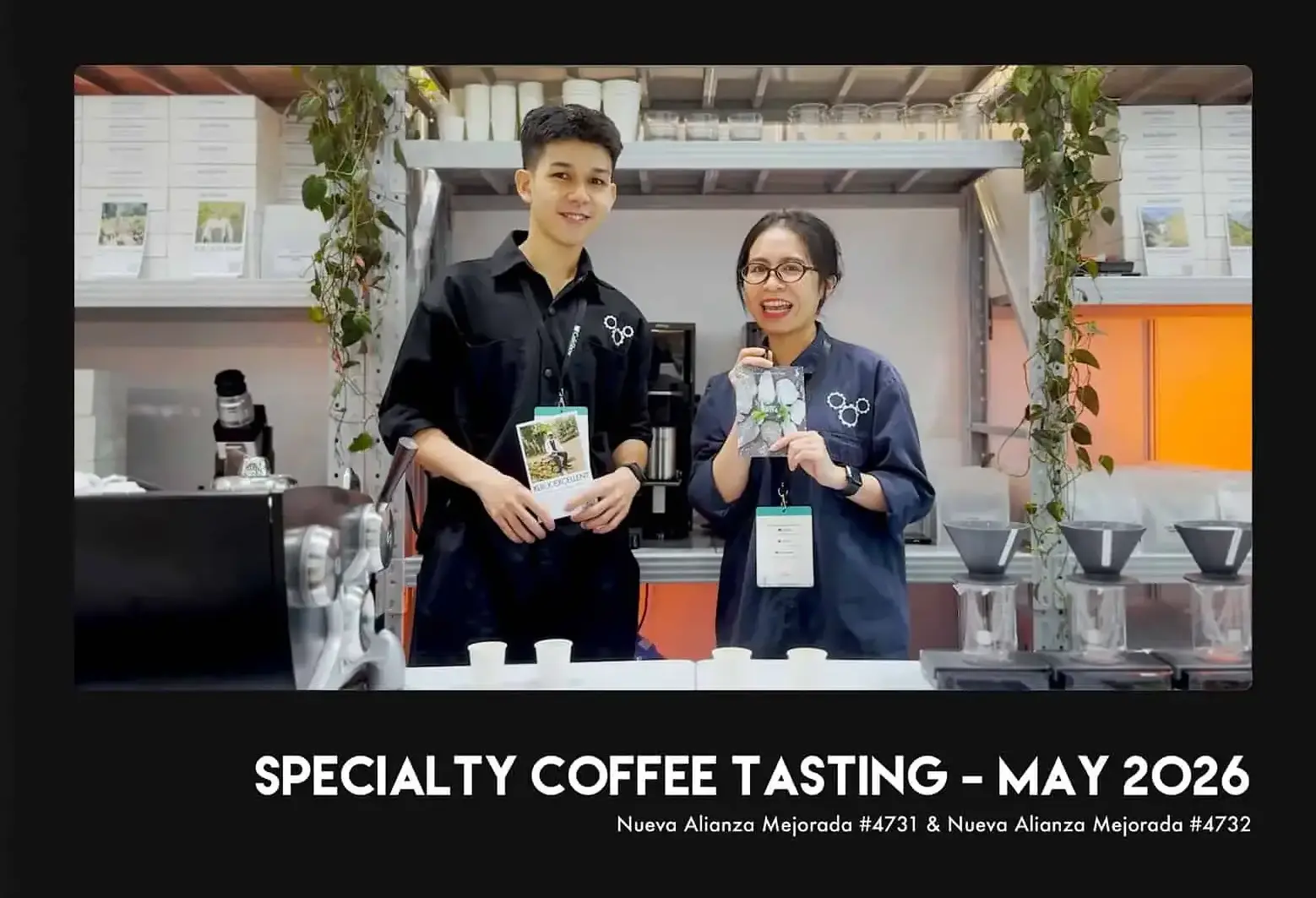
Unveiling May Discovery Subscription: Nueva Alianza Mejorada #4731 & Nueva Alianza Mejorada #4732
The Discovery Subscription is a silent dialogue, a place where the soul of the connoisseur finds a harmonious beat with distant lands. Like a transparent lens, we become storytellers, meticulously peeling back layers of cultural sediment, the breath of the soil, and the human philosophies hidden within every coffee bean.
May arrives with brilliant streaks of golden sunlight, a time when we long to hide beneath the lush, dew-drenched canopies of Santa Teresa. Amidst the silence of the Andes, when compassion touches Mother Earth, what will we hear? Perhaps it is a sweet response that nature reserves solely for souls who know how to wait patiently.

Specialty Coffee in Vietnam
BRAND VALUE
YOU SHOULD HAVE KNOWN
XLIII Coffee has been aiming to become a big, impactful company with social responsibilities,
have access to high-quality raw materials and convey the complete original values of coffee to our customer
